


Yesterday at Toastmasters, our topic couldn’t have been more in sync with my world and passion: the great outdoors. For anyone unfamiliar with Toastmasters, it’s an international public speaking and leadership club where people gather to practice communication skills in a supportive, structured environment. The meetings are filled with prepared speeches, impromptu topics, and constructive feedback—each designed to help members grow and gain confidence. During our “Table Topics” session, where members are given a few minutes to respond to an unexpected question or theme, the subject was “the outdoors.” Imagine my delight! I could talk about nature and outdoor play endlessly, so it took real self-control not to fill the whole session with my thoughts on how essential nature is in early childhood development.
The specific topic I was given was how children build resilience in nature—a topic that is close to my heart and my work with children. It’s a powerful subject because, in today’s world, resilience is essential. We live in a fast-paced society with challenges at every corner, and resilience doesn’t just appear suddenly when a child grows up. It’s built over time, one experience at a time, and nature is one of the best settings for this essential skill to develop.
Why is Resilience So Important?
Resilience is the ability to bounce back from setbacks, face challenges with a sense of determination, and adapt to new situations. For children, learning resilience early is a gift that will help them navigate school, relationships, and eventually, adulthood. But resilience doesn’t appear overnight. It’s not a lesson you can learn from a book or a skill you can master with a single activity. Resilience is developed over time, step by step, experience by experience. And as adults, we have an incredible opportunity to create environments that nurture resilience in children.
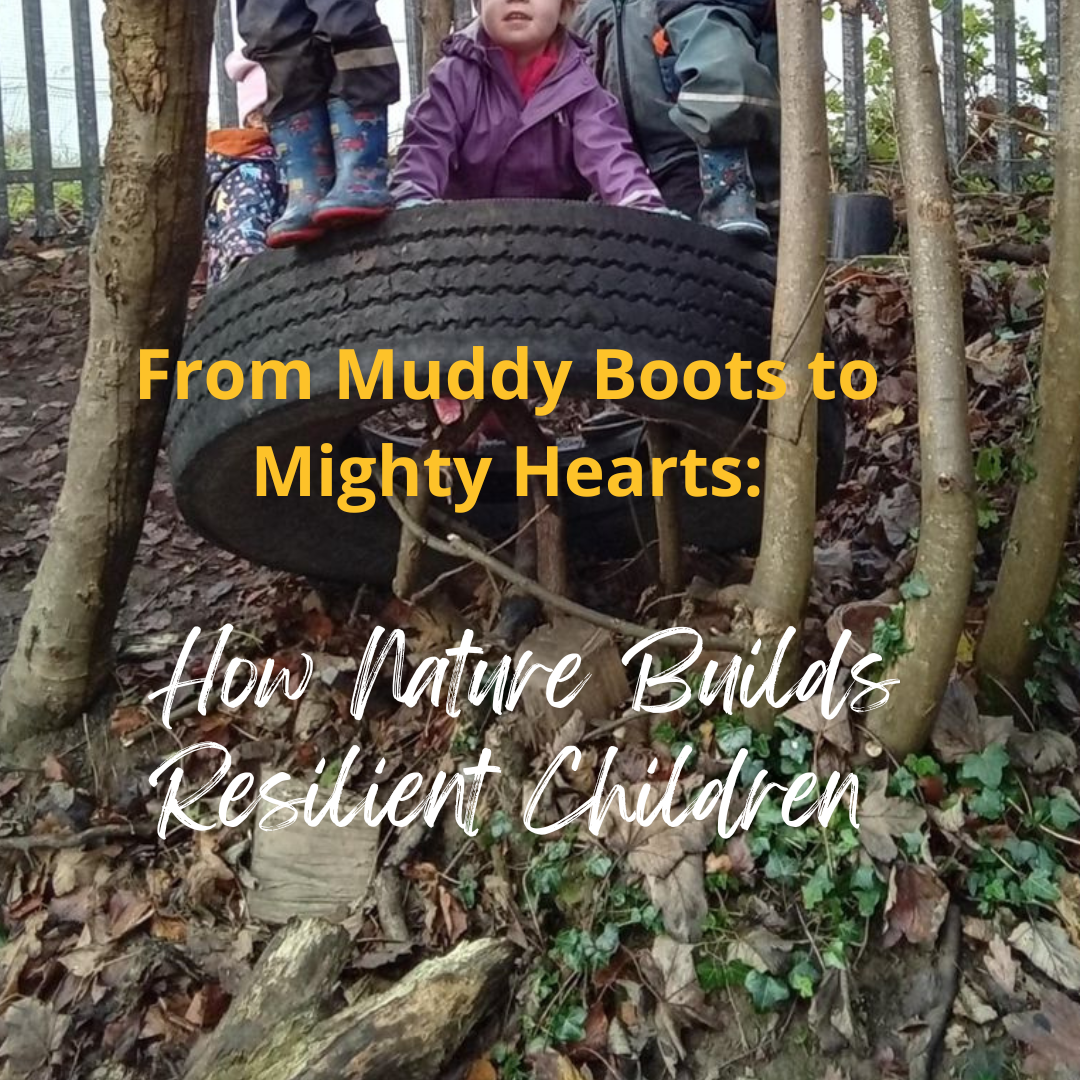
In my work with preschool children as young as 2.5 years old, we see how children transform through exposure to nature. Those first days, they often enter our outdoor space unsure and hesitant, staying close to familiar adults, looking to us for guidance and comfort. And that’s perfectly natural! Yet, within a short time, we see a shift—a kind of miracle unfolds as they start to explore the garden independently. They walk the trails, climb on logs, and interact with the natural world, often in ways we couldn’t plan or predict.
How Nature Builds Resilience in Children
So, why is nature such a powerful environment for building resilience? Unlike controlled indoor environments, nature presents children with elements of unpredictability. Weather, varying terrains, uneven surfaces, and the endless curiosity inspired by plants, insects, and animals—all these aspects of the natural world encourage children to test their limits, make decisions, and solve problems.
For instance, when a child encounters a large puddle after a rain shower, they might initially be hesitant. But soon, they might take a leap, figuring out how to land, how to stay balanced, and perhaps how to clean themselves up afterward! It’s a small challenge, but each of these little moments adds up to a greater ability to face obstacles, build independence, and develop inner strength.
The Journey from Dependence to Independence
Every year, I meet new children who enter our garden space, and at first, many of them rely heavily on adults for direction and reassurance. They cling to familiar faces, cautious of this vast, natural environment that seems to offer so many unknowns. But over time, as they become more comfortable with the space, they begin to venture out independently. They discover favourite areas of the garden, play imaginatively in the outdoor kitchen, or create games with natural materials they find.
Watching this transition from dependence to independence is truly magical. I often see children who, after just a few weeks, are exploring every corner of our garden with confidence. They climb, balance, explore, and even support one another, building social skills alongside physical resilience. They’re no longer just little ones in need of constant help—they’re curious explorers and budding problem-solvers.
Creating Environments that Foster Resilience
As adults—parents, educators, or caregivers—it’s our role to create environments that allow children the freedom to build resilience. This involves offering them spaces where they can safely take small, manageable risks, where they can test their independence, and where they’re encouraged to keep trying, even when they stumble. When we provide these kinds of opportunities, we empower children to develop resilience naturally. And the impact is long-lasting: they become stronger, more adaptable, and better equipped to face the challenges of the world around them.
The Gift of Resilience
Resilience is a skill that grows gradually, layer by layer. Through outdoor play, we see children transform as they encounter the world on their terms, building confidence and learning valuable lessons that will serve them throughout life. The nature-based approach I use with my team supports children in discovering who they are and what they’re capable of. And seeing them blossom in the process is a reminder of why resilience matters—not just in childhood, but in every phase of life.
So here’s to nature and to the endless lessons it provides. Here’s to those muddy boots, scraped knees, and fearless little explorers who, day by day, are becoming resilient humans capable of weathering whatever life throws their way.